
Is the Rs. 2.30 lakh difference between the Yamaha YZF-R2 and R15 V4 worth it?

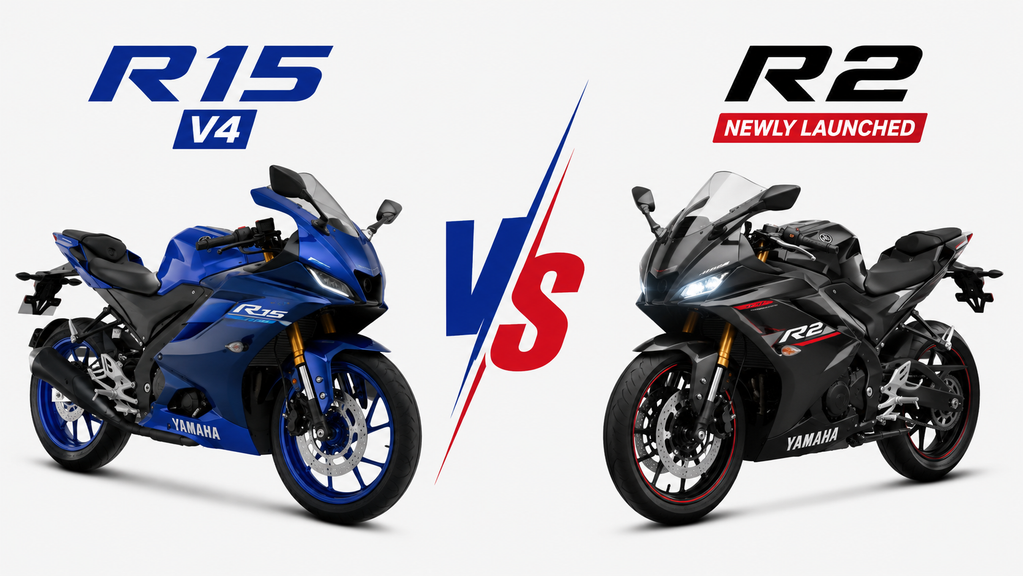
- The R2 boasts three riding modes, a five-inch TFT, and a bi-directional quickshifter on higher versions. Its all-
- new 204cc engine produces 26 horsepower, compared to the R15 V4’s 18 horsepower 155cc single.
- The R15 V4 weighs eight kilograms less and is significantly less expensive.
Indian riders now have a logical step up from the R15 V4 with the introduction of the Yamaha YZF-R2. R2 adopts the same general supersport concept but advances in terms of equipment, performance, and, unavoidably, cost. The average ex-showroom price of the popular R15 V4 is approximately Rs. 1.75 lakh, while the R15M Carbon Fiber costs slightly more than Rs. 2.01 lakh.
The pricing of the recently released R2 is Rs. 2,30,500. Keep in mind that all prices listed below are ex-showroom Delhi. The R2M is priced at Rs. 2,53,000, while the quickshifter version costs Rs. 2,39,500. The additional expenditure needed for an R2 is significant for someone considering a basic R15. But a consumer who is already thinking about a top R15M is only about Rs. 29,000 away from the base R2. Hmmm…
Performance Create that Clear Step Up
The dependable 155cc liquid-cooled single engine of the R15 generates 18 horsepower at 10,000 rpm and 14.2 Nm at 7,500 rpm. It comes with a six-speed gearbox, a slipper clutch, and assistance. While VVA helps expand the usable performance range rather than focusing everything on the redline, this little engine prefers rpm.
The R2 is not just a bigger R15 engine; it goes in a completely other direction. At 10,000 rpm and 19.1 Nm, this recently developed 204cc liquid-cooled single produces a greater 26 horsepower. To minimize friction and reciprocating mass, it employs a finger-follower valvetrain coated in diamond-like carbon. Instead, the larger engine generates more performance by utilizing its revised head design, different valve architecture, and more capacity.
Thus, the R2 has around 35% more torque and 44% more peak power than the R15’s stated 18 horsepower. Its kerb weight of 149 kg is only 8 kg more than that of the R15, which weighs 141 kg. This would imply that during acceleration, power-to-weight improvement should be readily apparent.
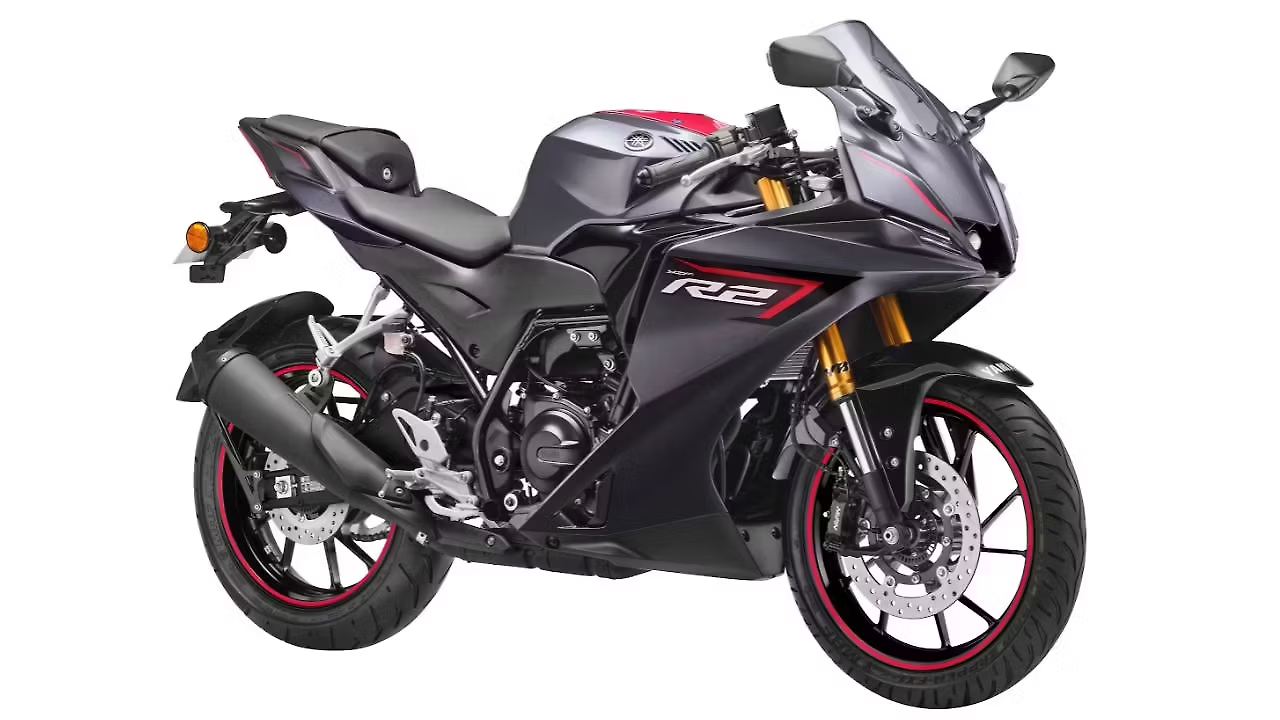
We have long admired the R15 for its high-revving engine and communicative handling, characterizing it as both a beginner’s racing tool and an everyday motorbike. Before reaching the same conclusion regarding the new bike, we still need to conduct our road test of the production R2.
Chassis and Electronics Put More Distance Between Them
Beneath the bodywork, the variances persist. Yamaha’s Deltabox frame, linked-type monocross rear suspension, and 37mm upside-down front forks are used in the R15. It had an 11-liter gasoline tank, 815mm of seat height, and 170mm of ground clearance.
R2’s geometry is inspired by the YZF-R6, and it employs a brand-new high-tensile steel tube diamond frame that weighs only 14 kg. It still has a 170mm ground clearance. Despite being the larger motorcycle, the R2’s seat is actually five millimeters lower at 810mm. The fuel capacity rises to 12 liters.
The R2M takes one step further with an adjustable front suspension, rear shock, clutch lever, and brake lever. The R2 also has linked monocross rear suspension and 37mm USD front forks. For improved feel, Yamaha has also added a radially placed front brake caliper to the R2. Dual-channel ABS is included with both motorcycles. Electronics demonstrate how far the segment has come since the release of the R15 V4.
For its capacity, the R15 already has a very good equipment list. Traction control, dual – channel ABS, Bluetooth, Track and Street display modes, and an assist and slipper clutch are all included. The R15M comes with a color TFT, and some higher versions come with a quickshifter as standard. Upshifts are the focus of that quickshifter.
The level is noticeably raised by the R2. A five-inch color TFT, traction control, Yamaha Ride Control, an assist and slipper clutch, and Street, Sport, and Rain riding modes are all included with all versions. A bi-directional quickshifter, which enables clutchless upshifts and downshifts, is introduced in the middle variation. The R2M adds its Smart Key system, superior trim, and customizable hardware while keeping the quickshifter.
Additionally, the ways in which the two motorcycles convey their identities differ. The R15 remains a targeted compact supersport. Younger riders can learn handling without having to handle scary performance thanks to its small size, low weight, narrow tires, dedicated riding position, and tested chassis.
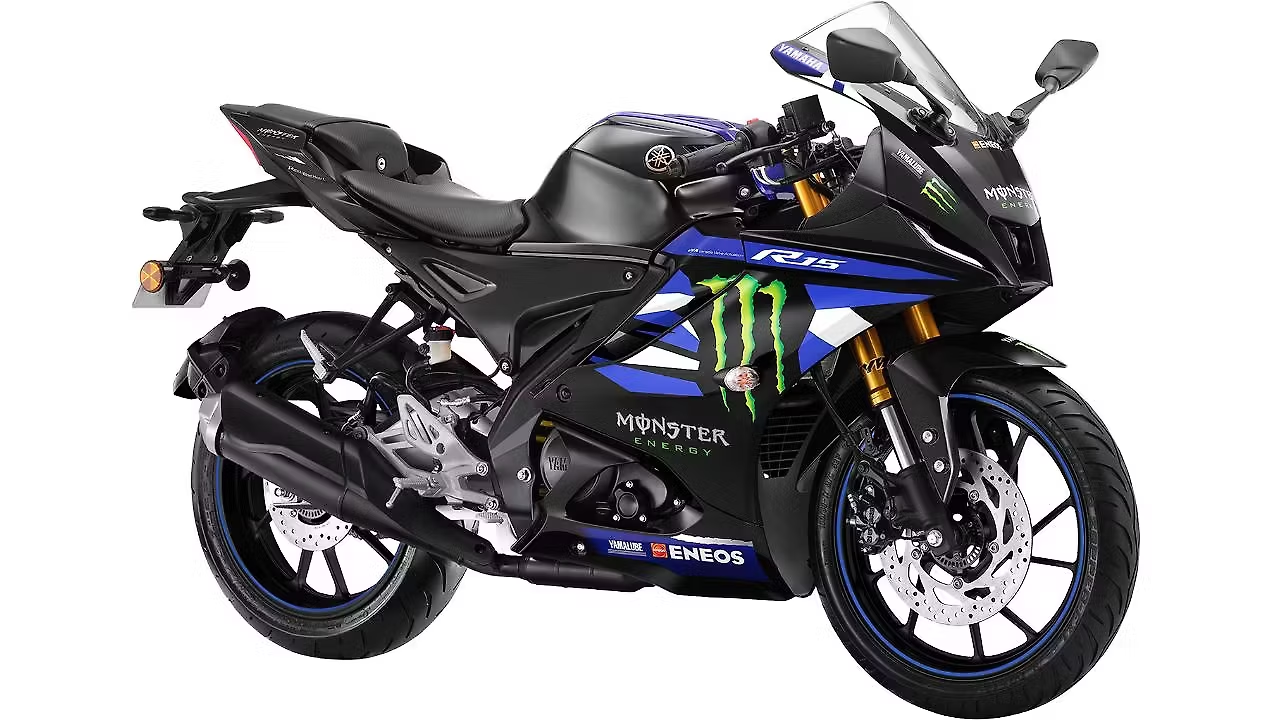
More headroom is available with the R2. The additional electronics offer more flexibility as the rider’s skill level increases, and the engine should require less concessions when passing or maintaining higher highway speeds. In that regard, it is more like to a motorcycle that a person can develop rather than quickly outgrow.
Which Yamaha Should You Pick?
The R15 V4 still makes a lot of sense if you are a first-time buyer of a performance motorbike. It is less expensive to purchase, uses less fuel, weighs less, and has been on Indian roads long enough for its advantages and disadvantages to be clearly recognized. Its agile handling, excellent construction, sophisticated engine, and capacity to function as both a road motorbike and an entry-level track machine have all been repeatedly demonstrated by our tests.
There are concessions. Its 155cc engine requires revs when rapid acceleration is needed, and the riding position is dedicated, especially for riders who spend a lot of time in traffic. Its supersport priorities may also be exhausting for someone who frequently carries a pillion or travels long highway trips.
The rider who has overcome these constraints is the target of the R2. Its most obvious client is probably an existing owner of an R15 or MT-15. Someone who wants Yamaha’s version of a lightweight supersport but is thinking about a KTM RC 200. This motorcycle has a lot more power because to its 26 horsepower, 149 kg kerb weight, three riding modes, full TFT instrumentation, and, on higher models, a true bi-directional quickshifter.
Which variation, though? Perhaps the most intriguing argument is made by the base R2. It already features the new engine, TFT, riding modes, traction control, USD forks, and the same basic chassis as the pricey R2M for just Rs. 2.30 lakh. After that, buyers can determine if paying an additional Rs. 9,000 for the quickshifter is worthwhile. With its quality detailing and adjustable suspension, the Rs. 2.53 lakh R2M is more specialized and appealing to riders who like to take the chassis more seriously.
The choice between a base R2 and a top R15M is more difficult. If sheer performance is the top aim, it becomes more difficult to justify saving an additional Rs. 30,000 after the R15 exceeds Rs. 2 lakh. Without significantly increasing its weight or height, the R2 offers significantly more power and torque.
However, the R15 V4 is still nearly unbeatable at the bottom end of Yamaha’s own lineup. Without going beyond Rs. 2.30 lakh, you are paying about Rs. 1.75 lakh for that supersport look, VVA engine, superb chassis, traction control, USD forks, and dual-channel ABS.